
Clinically reviewed by Dr. Chris Mosunic, PhD, RD, MBA
Struggling with anxiety? Learn how mindfulness meditation can support people with anxiety disorders and explore 10 science-backed ways to try it for yourself.
Living with an anxiety disorder is different from simply feeling anxious. Anxious moments pass, but an anxiety disorder sticks around, shaping how you move through the world. It may contribute to what you avoid, how you sleep, and how much mental energy you expend each day. It can be difficult to manage.
Luckily, mindfulness meditation has gained real traction as a tool for managing anxiety, but it’s not a cure-all or a one-size-fits-all solution. The research shows that it works best with consistency and can be even more effective when used as part of a broader approach to care.
We’ll share what the evidence says about mindfulness meditation for anxiety disorders, who it’s been shown to help, and how it can be tailored to specific diagnoses, including generalized anxiety disorder (GAD), panic disorder, social anxiety disorder, and specific phobias.

What is mindfulness meditation?
Mindfulness meditation is the practice of paying attention to the present moment without judgment. That usually means noticing sensations in the body, the breath, as well as thoughts and emotions as they come and go.
Instead of trying to stop anxious thoughts, mindfulness builds the skill of observing them and letting them pass. So an anxious racing thought becomes something to notice rather than something to fight. The goal isn’t to empty the mind, but to change your relationship with what shows up.
In practical terms, mindfulness meditation can look like:
Sitting quietly and focusing on the breath for a few minutes
Doing a body scan and noticing areas of tension
Paying attention to the feeling of your feet on the ground while walking
Bringing gentle awareness to sounds, smells, or physical sensations
It’s less about achieving some perfect state of calm and more about practicing awareness.
Related read: How to use mindfulness for anxiety: 7 techniques that help

Can mindfulness meditation help with anxiety disorders?
Research suggests that mindfulness-based programs may lower overall anxiety levels, reduce rumination, and strengthen emotional regulation skills, which can certainly make a difference with anxiety disorders.
Much of the research has focused on structured programs such as Mindfulness-Based Stress Reduction (MBSR), which typically run for about eight weeks. In these studies, people with generalized anxiety disorder (GAD) and other anxiety conditions often report fewer symptoms and improved stress management after consistent practice. This suggests that benefits tend to build gradually rather than overnight.
Here’s how mindfulness meditation may support anxiety disorders:
It interrupts the worry cycle: Anxiety often pulls attention into future-focused fear. Mindfulness gently trains attention to return to the present moment.
It changes the response to anxious thoughts: Instead of automatically believing every fearful thought, people learn to notice thoughts as mental events.
It helps calm the body’s stress response: Slow, steady breathing has been linked to increased parasympathetic, or ‘rest-and-digest,’ activity and may reduce physical signs of stress for some people.
It builds distress tolerance: Sitting with mild discomfort during meditation can increase confidence in handling anxious feelings outside of it.
Related read: How to use meditation for anxiety: 12 tips & techniques

How to use mindfulness meditation for anxiety relief: 5 tips for anxiety relief
Mindfulness meditation works best as part of a broader support system, which may include therapy, medication, social support, and lifestyle changes. If you’re just starting to seek support for an anxiety disorder, mindfulness can help you begin gently as you assemble your care plan.
1. Start smaller than you think you need to
Two to five minutes is enough. For someone with generalized anxiety or panic symptoms, even one minute of steady breathing can feel like progress. If it helps, set a one-minute timer, then simply breathe deeply for that minute and notice how you feel. When the timer ends, give yourself a pat on the back and remind yourself that you’ve begun.
Related read: One-minute meditation: benefits and how to do a quick practice
💙 Explore Calm’s collection of Quick Meditations.
2. Choose a posture that feels safe and comfortable
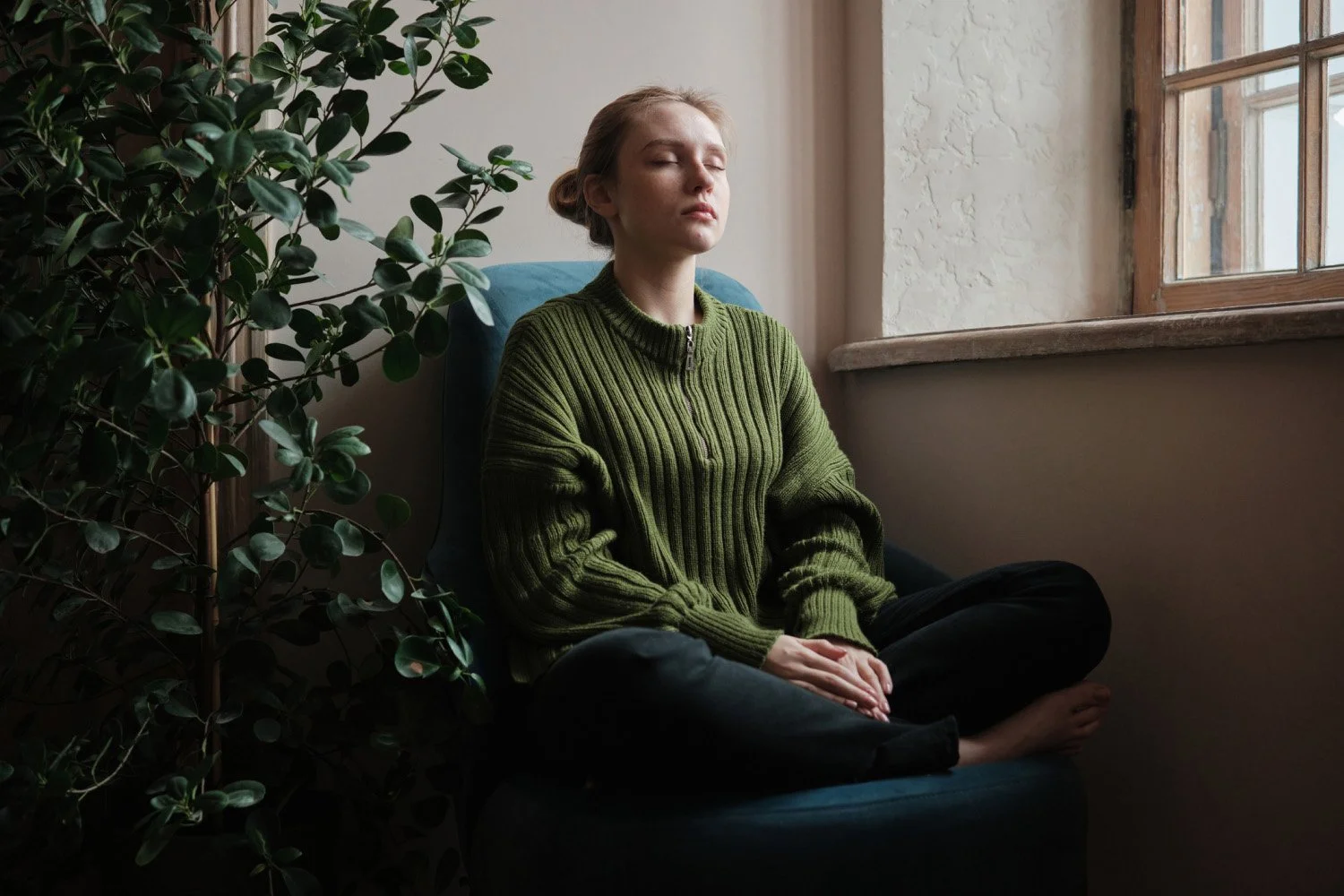
There’s no rule that meditation has to happen cross-legged on the floor. For people with anxiety disorders, physical comfort and a sense of safety matter. If closing your eyes increases anxiety, keep them open. If silence feels intense, play soft background noise.
Try this:
Sit in a chair with both feet flat on the ground
Lean back against a wall or couch
Keep your eyes softly open and focused on one spot
3. Use an anchor to ground you
The breath is the most commonly taught focus point, but it’s not the only one. Sounds, physical sensations, a calming phrase, or the feeling of your feet on the ground are all equally valid, and for some people with anxiety disorders, they’re a better starting point.
If breath-focused practice makes you feel more anxious, that’s a sign to switch to a different focus point, not to push through. The goal is to find something neutral and reliable that you can return to when the mind wanders.
💙 Want to try anchoring to your breath? Pause to Breathe with Prof. Megan Reitz.
4. Consider structured programs like MBSR
Mindfulness-Based Stress Reduction, or MBSR, is an eight-week program that teaches meditation, body awareness, and gentle movement. Research shows it can reduce symptoms of anxiety disorders for many people, with effects similar to other structured treatments.
The structured format helps with accountability, and the group setting can reduce isolation, which can be a common experience with anxiety disorders. And for people who struggle to practice alone, learning in community can make a significant difference.
Related read: Mindfulness-based stress reduction (MBSR): What is it and how to practice it
5. Pair mindfulness with professional and social support
Therapy, medication, support groups, and trusted relationships all play important roles when dealing with an anxiety disorder. And discussing your mindfulness practice with a therapist can help tailor it to your specific needs.
When anxiety shrinks your world, mindfulness can slowly expand it again. Not by eliminating fear, but by helping you stay present and connected even when fear shows up.

How to use mindfulness meditation for specific anxiety disorders
Mindfulness can support all anxiety disorders, but what works best can look different depending on your diagnosis. The focus point you use, the type of practice, and what to watch out for may all vary. Here’s a closer look at how mindfulness can be tailored to some of the most common anxiety disorders.
Mindfulness for generalized anxiety disorder (GAD)
GAD means living with worry that doesn’t really switch off. It tends to move from topic to topic and often comes with physical symptoms like muscle tension, poor sleep, restlessness, and irritability. It can be exhausting.
Practices that tend to work well for GAD:
Thought labeling: When a worry shows up, try silently naming what kind of thought it is — “worrying,” “planning,” or “catastrophizing.” Then bring your attention back to your focus point. It’s a simple way to remind yourself that a thought isn’t a fact.
Body scan: GAD often shows up in the body, such as tight shoulders, a clenched jaw, and a heavy chest. A short body scan can help you catch these patterns early.
Mindfulness in daily routines: Small moments of mindful attention built into things you already do—like noticing the feel of the water while washing your hands or taking three slow breaths before opening a work email—can be just as useful as a formal sitting practice.
If sitting quietly makes the worry feel louder at first, that’s normal. Starting with two to five minutes and slowly building from there can help. Mindful walking is a good alternative if sitting still feels like too much.
Mindfulness for panic disorder and agoraphobia
Panic disorder means having panic attacks that can seem to come out of nowhere, with a sudden wave of intense fear and physical symptoms like a racing heart, shortness of breath, or dizziness. Many people start to worry about when the next one will hit, which can lead to avoiding certain situations. For some, that avoidance grows into agoraphobia, a fear of places that feel hard to escape from, like public transport, crowded spaces, or being outside alone.
A few things to be aware of when meditating with panic disorder:
Consider sounds or body sensations as your anchor rather than the breath: For some people with panic disorder, paying close attention to the breath can make breathing feel more noticeable and trigger symptoms. If that happens, try focusing on sounds around you, the weight of your body in a chair, or the feeling of your feet on the floor. Mindful walking is a good option too.
Use grounding during high anxiety or panic: When panic hits, sitting quietly and focusing inward is often too hard. A grounding practice can help: notice five things you can see, four you can hear, three you can physically feel, two you can smell, and one you can taste.
Build familiarity with physical sensations gradually: Over time, noticing a racing heart or tight chest with curiosity, rather than alarm, can take some of the fear out of those feelings. Take it at your own pace, and ideally work through this alongside a therapist.
Body scan practices can feel intense for some people with panic disorder, so go slowly. It’s worth letting your therapist know you’re trying mindfulness so they can help shape the approach.
Mindfulness for social anxiety disorder
Social anxiety disorder is an intense fear of social situations where you might be judged or watched. It can make everyday things, like speaking up at work or making a phone call, feel really difficult.
Social anxiety often pulls attention inward, toward what might be going wrong or how you might be coming across. That narrowing of focus is a natural response to feeling threatened. Mindfulness gently trains attention back outward, toward what’s actually happening, which can make situations feel a little less overwhelming.
Outward-focused attention: Try open-eyed meditation that brings attention to what’s around you: sounds in the room, what you can see, the feeling of your feet on the floor. This builds the same skill you’re working toward in social situations.
Mindful listening: In conversations, try giving your full attention to what the other person is saying rather than watching yourself from the inside. This works directly against the self-monitoring that keeps social anxiety going.
Compassion-focused practices: Self-criticism is common with social anxiety. Practicing loving-kindness meditation, which involves directing kind intentions toward yourself, can be a helpful addition to attention-based practice.
Group programs like MBSR can feel like a lot if you have social anxiety. But don’t write it off just yet, as the format tends to be low-pressure, and most people in the room are working through something too. That said, if a group feels like too big a step right now, guided meditation is a good place to start.
Mindfulness for specific phobias
A specific phobia is a strong, lasting fear of a particular thing or situation, like heights, needles, or animals. The main treatment is usually exposure-based CBT, which involves gradually facing the feared thing in a safe, controlled way. Mindfulness doesn’t replace that, but it helps you build the ability to sit with discomfort without immediately pulling away, which is exactly what makes exposure therapy work.
Distress tolerance practice: Regular mindfulness meditation, even on ordinary days when the phobia isn’t triggered, builds your ability to sit with discomfort. This makes the anxiety that comes up during exposure-based treatment easier to tolerate.
Mindful observation of fear: When mild fear arises, try naming what you notice: “there’s a tight feeling in my chest,” “there’s a thought that something bad will happen.” This labeling practice can create a little distance from the fear response.
Pairing mindfulness with exposure work: If you’re working with a therapist on exposure, mindfulness can help you stay regulated between sessions. Let your therapist know you’re practicing so they can factor it in.
Research on mindfulness as a standalone treatment for specific phobias is more limited than for other anxiety disorders. If you’ve been reorganizing your life around a specific fear, working with a therapist who specializes in anxiety disorders is an important step alongside any mindfulness practice.
Read more: What are the most common phobias? Plus, how to treat them

Mindfulness meditation for anxiety disorders FAQs
Which mindfulness technique is best for anxiety?
Breath awareness and body scan meditations are often most helpful for anxiety because they focus attention on physical sensations, which can feel steadier than racing thoughts.
Breath-focused practices may help regulate the nervous system, while body scans build awareness of tension patterns that often go unnoticed. That said, the best mindfulness technique is the one that feels manageable and safe.
For some people with panic or social anxiety, mindful walking, gentle stretching, or guided meditations feel more accessible than silent sitting. Comfort and consistency matter more than choosing the “perfect” method.
Do I need to meditate every day for it to work?
No, you don’t need to meditate every day for mindfulness to help with anxiety disorders. Regular practice strengthens the skill, but it doesn’t have to be daily to be effective.
Practicing three to four times a week, or even weaving short mindful moments into daily routines, can still build awareness and emotional regulation.
How long until I feel a difference from mindfulness?
Some people notice small shifts, such as a slightly calmer body or clearer awareness of their thoughts, within their first few mindfulness sessions. For many others, meaningful changes take several weeks of consistent practice.
Research on mindfulness-based stress reduction (MBSR) programs often measures improvements after about eight weeks, which reflects how gradual this process can be. And the changes may not feel dramatic — they often show up as catching worry spirals sooner, recovering more quickly from anxious moments, or feeling less overwhelmed in situations that used to trigger intense fear.
What if I feel more anxious when I sit down to meditate?
It’s common to feel more aware of anxiety at first because meditation reduces distractions and increases contact with thoughts and sensations.
If sitting still makes anxiety spike, try shortening the session, keeping your eyes open, or switching to a grounding practice such as mindful walking or noticing sounds in the room.
If meditation consistently increases distress, especially for people with trauma histories or severe panic, it may help to practice with guidance from a therapist or trained mindfulness teacher who can adapt the approach.
What is Mindfulness-Based Stress Reduction (MBSR), and how does it help anxiety?
Mindfulness-Based Stress Reduction, or MBSR, is a structured eight-week program developed to teach mindfulness meditation, body awareness, and gentle yoga. Participants typically attend weekly group sessions and practice at home between classes.
Research suggests MBSR can reduce symptoms of anxiety disorders by improving emotional regulation, decreasing rumination, and increasing tolerance for uncomfortable sensations. The group format can also reduce feelings of isolation, which often accompany anxiety, and provide accountability that makes it easier to maintain a regular practice.
Can kids or teens with anxiety try mindfulness meditation?
Yes, children and teens with anxiety can practice mindfulness in developmentally appropriate ways. Short grounding exercises tend to work best, such as taking three slow breaths, noticing five things they can see, or paying attention to the feeling of their feet on the ground. Practices are usually brief and more interactive than adult meditations.
For young people with anxiety disorders, mindfulness is most effective when supported by caregivers, teachers, or mental health professionals who can model the skills and create a sense of safety around the practice.
Calm your mind. Change your life.
Mental health is hard. Getting support doesn't have to be. The Calm app puts the tools to feel better in your back pocket, with personalized content to manage stress and anxiety, get better sleep, and feel more present in your life.

Images: Getty