How to find the best meditation posture for your body

Clinically reviewed by Dr. Chris Mosunic, PhD, RD, MBA
Wondering what postures work best for meditation? Learn 4 traditional positions, why posture matters, and how to find what feels right for you.
You set a timer, find a quiet corner, and sit down to meditate. Two minutes in, your lower back is aching and your foot has gone numb. All you can focus on is how uncomfortable you feel. Sound familiar?
Posture often gets overlooked when it comes to meditation, partly because the image of the perfectly cross-legged meditator is so widespread. The truth is, there's no single “right” posture, and there are more options than you might think.
Curious to learn more? We’ve got you. Here’s a look at why posture matters in meditation, what the main postures are, and how to find what works best for your body.

What is a meditation posture?
A meditation posture is any body position that supports your practice. It's the physical foundation you settle into before you begin meditating, whether you're focusing on your breath, doing a body scan, or working through a guided session.
Postures cover a wide range of positions, including sitting on a cushion, lying flat on the floor, and standing still. A position counts as a meditation posture when it helps you stay present without distraction or discomfort.
Different traditions have their own preferred postures, but the underlying goal is the same — find a position stable enough to support you and comfortable enough that your body doesn't pull your awareness away from your mind.
Related read: How to meditate for beginners: 8 tips to get started
Why does posture matter in meditation?
Posture matters because your body and mind are closely connected. When you're slouched or straining your muscles, that physical tension tends to show up mentally too, often as restlessness or trouble focusing.
A supportive posture can keep you alert without becoming tense, help regulate your breath, and signal to your nervous system that it's time to slow down. Over time, a consistent supportive posture can become a useful anchor in your practice.
Just to be clear, this isn't about achieving flawless form. Forcing your body into a shape that causes pain or restricts breathing works against you. The aim is a position that's solid and sustainable, not perfect. And if a posture isn't available to your body, whether because of pain, injury, or mobility, that's completely okay. Choose what works for you, and let the rest go.

What are the 4 meditation postures?
Many meditation traditions reference four foundational postures — sitting, standing, walking, and lying down. Think of them as a practical map of the positions available to you, with flexibility to adjust based on your preferences.
Sitting
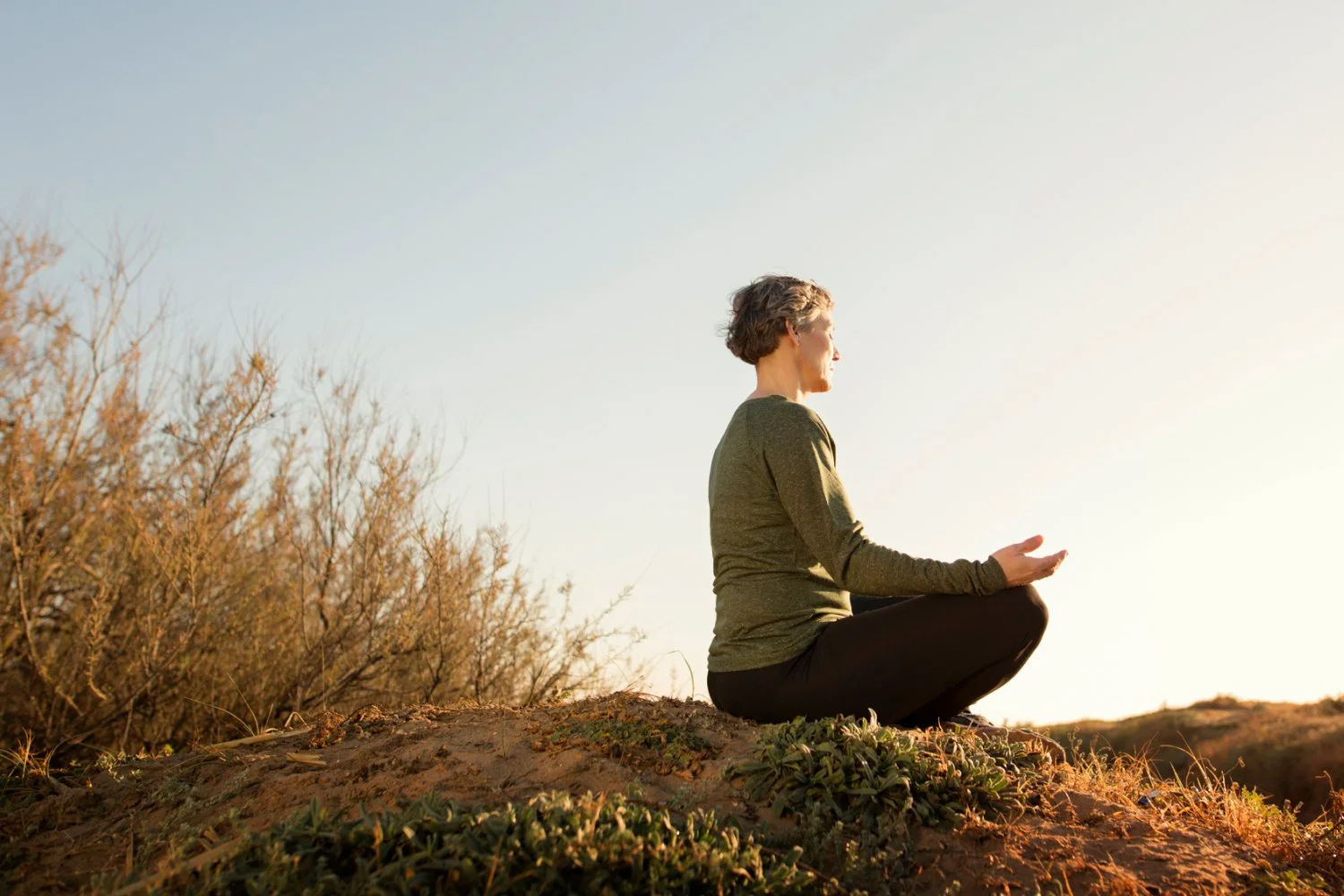
Sitting is the most commonly taught posture, but it covers more than the classic cross-legged pose. If you’re sitting in a chair, sit toward the front edge, feet flat on the floor, hands on your thighs, and spine lengthening upright without straining.
If you’re on the floor, a meditation cushion or folded blanket tilts your pelvis forward and prevents your lower back from rounding.
Kneeling is another option, with your shins on the floor and weight resting on your heels. Or place a low bench over your calves and sit on that instead. Many people find that kneeling keeps the spine upright with less effort.
Standing
Standing requires a little more physical effort than sitting, which can support engagement. Position your feet hip-width apart, soften your knees, relax your arms at your sides, and tuck your chin slightly. It’s a great option when sitting causes discomfort, and it suits short mindfulness pauses during the day without needing any props or setup.
Walking
Walking meditation brings your attention to the movement of your body. Walk a short path of 10–20 steps at an easy pace, noticing how your foot lifts, moves, and settles with each step. Then pause, turn, and walk back just as slowly. Try keeping your eyes open with a soft downward gaze. This posture can be especially valuable if you struggle to sit still.
Lying down
Lying down suits body scans, yoga nidra, and relaxation-based practices well. Lie on your back on a firm surface, arms a few inches from your body, palms facing up. Placing a pillow under your knees helps support the lower back. To combat sleepiness, prop one forearm upright with the elbow on the floor as a gentle alert if you start to drift off.

6 tips for identifying your best meditation posture
The best posture for meditation is the one that makes you feel steady and comfortable enough to keep returning to your practice. While there's no "correct" posture to strive for, these tips can help you tune into your body and adjust your posture to fit what it needs.
1. Find comfort before form
Instead of asking "Am I sitting correctly?" ask "Can I stay here without distraction?" If you spend the first five minutes of every session managing discomfort, the posture isn't serving your practice.
Begin with whatever option feels most comfortable, often a chair, and treat other postures as something to explore gradually at your own pace.
2. Check in with your spine
A tall spine matters across all meditation postures. It keeps your breath moving freely and helps you stay alert without strain.
A useful mantra is ears over shoulders over hips. That alignment requires little muscular effort to hold, so it tends to feel stable and natural.
If you notice yourself hunching forward or struggling to stay upright, your posture likely needs more support. Try adding height under your seat, using a back support, or switching to a different position altogether. And if an upright spine isn't comfortable or possible for you, that's fine — reclined or lying down works too.
💙 Try a Body Scan on Calm to build better body awareness.

3. Use props to your advantage
Cushions, folded blankets, chairs, and benches are tools that can support your posture and make your practice more comfortable.
A meditation cushion under your seat tilts the pelvis forward and reduces lower back strain. You can also place a blanket under your knees in a lying posture to ease pressure on your lower back.
4. Give each posture a fair chance
Some discomfort in an unfamiliar posture is normal while your body adapts. Give any new position a few sessions before deciding it’s not for you.
Even so, it’s worth knowing the difference between the dull ache of adjusting to a new posture and sharp or worsening pain, which is a sign to stop and try something else instead.
5. Make mindful adjustments in the moment
Shifting position mid-meditation may be necessary, but it should be done mindfully. If you move the instant you feel uneasy, you're training reactivity rather than awareness.
When you notice the urge to move, pause for a few breaths first. If what you're feeling is numbness, restricted breathing, or sharp pain, adjust right away, but do it gently and with intention.
💙 Notice the urge to move before acting on it with The Delicate Art of Noticing on Calm.
6. Match your posture to your practice
Different postures suit different types of meditation:
Sitting: breath-focused and open awareness practices
Lying down: body scans and yoga nidra
Standing: quick mindfulness resets and alertness-building
Walking meditation: mindful movement practices
Experimenting across postures, rather than defaulting to one, creates a more flexible and resilient practice.
💙 Get outside and explore mindfulness in motion with a Mindful Walking session on Calm.
Read more: The benefits of moving meditation and how to start practicing

Meditation posture FAQs
Why is posture important while meditating?
Posture is important because your physical position affects your alertness and focus. A supported, upright spine allows your breath to move freely, which helps regulate the nervous system and makes it easier to settle into a calmer state. When you're slouched or straining, that tension tends to show up mentally too, often as restlessness or difficulty settling in.
That said, good posture in meditation shouldn’t be rigid or effortful. The goal is a position that's stable and sustainable. A helpful mantra is ears over shoulders over hips, the alignment that requires the least muscular effort to hold. And if an upright spine isn't an option for you, lying down or a reclined position works too.
What’s the best posture for meditation?
The best posture for meditation is the one that allows you to feel relaxed and alert at the same time. For many, that's sitting upright in a chair or on a cushion, though it varies from person to person. What matters most is that your spine has some length, your breath can move freely, and you're not managing pain.
If you're not sure where to start, try a chair. It's accessible, adjustable, and requires no additional props. From there, you can experiment with floor-based postures as you get more familiar with your own patterns of tension and comfort.
Can I meditate lying down?
Yes, lying down is a great meditation posture, well suited for body scans and relaxation-based practices. Lie on a firm surface, place a pillow under your knees to support your lower back, and cover yourself with a light blanket if you tend to feel cold when still.
Watch for drowsiness. If you find yourself falling asleep often, try practicing earlier in the day, keeping your eyes slightly open, or raising one forearm upright with your elbow on the floor.
Some sleepiness is normal, but if you're regularly falling fully asleep, this posture may suit wind-down sessions better than focused practice.
How should I hold my hands during meditation?
There's no single correct hand position for meditation. Resting your hands palm-down on your thighs is grounding, while palms-up can feel more open. Some traditions use mudras—intentional hand gestures believed to influence attention and energy—but these are entirely optional.
The practical test is whether your hand position creates tension in your arms, shoulders, or neck. If it does, adjust. Within the first minute or two, your hands should feel comfortably settled. If you're using a mudra and keep losing it, that's a sign to simplify.
Read more: 9 hand positions for meditation to add to your practice
What should I do if my back hurts during meditation?
Start by checking a few basics:
Is your lower back rounding? Try sitting on a higher surface (like a folded blanket or firm cushion) to tilt your pelvis slightly forward.
Are your shoulders pulled up or forward? Let them drop and roll back gently.
Is your chin jutting out? Tuck it slightly toward your throat.
If adjusting your position doesn't help, switching postures often does. A chair is a practical first move if floor sitting is causing pain. Gentle stretching or movement before you sit can also make a difference, especially if you've been at a desk for hours beforehand.
If back pain is persistent or worsens during practice, it's worth speaking with a doctor or physical therapist.
Do I have to sit cross-legged to meditate?
No, cross-legged sitting is merely one meditation posture among many. Meditating in a chair, kneeling, standing, walking, or lying down are all sound options, and each suits different bodies, practice styles, and moments in your day.
The cross-legged image is common in meditation culture, but it's not a requirement. Many experienced meditators—including teachers with decades of practice—sit in chairs, walk, stand, or lie down instead.
Can I change my posture during meditation?
Yes, you can change your posture during meditation, and it's often the right call. The distinction worth making is between adjusting because your body is in discomfort and shifting because you're feeling restless or bored. Both are valid, but they call for different responses.
If there's physical discomfort—like pain, numbness, or restricted breathing—change your posture right away. Shift your weight, adjust your seat, or switch positions entirely. Do it slowly and with the same awareness you'd bring to any other part of the practice.
If what you're feeling is closer to mental restlessness, it can help to sit with it for a moment first. Then, if the feeling persists, go ahead and adjust.
Related read: How to build a meditation practice that actually sticks
Calm your mind. Change your life.
Mental health is hard. Getting support doesn't have to be. The Calm app puts the tools to feel better in your back pocket, with personalized content to manage stress and anxiety, get better sleep, and feel more present in your life.

Images: Getty