
Clinically reviewed by Dr. Chris Mosunic, PhD, RD, MBA
If you’re feeling anxious or tense, discover 5 calming meditation techniques that can help you ease tension, clear your mind, and find your calm again.
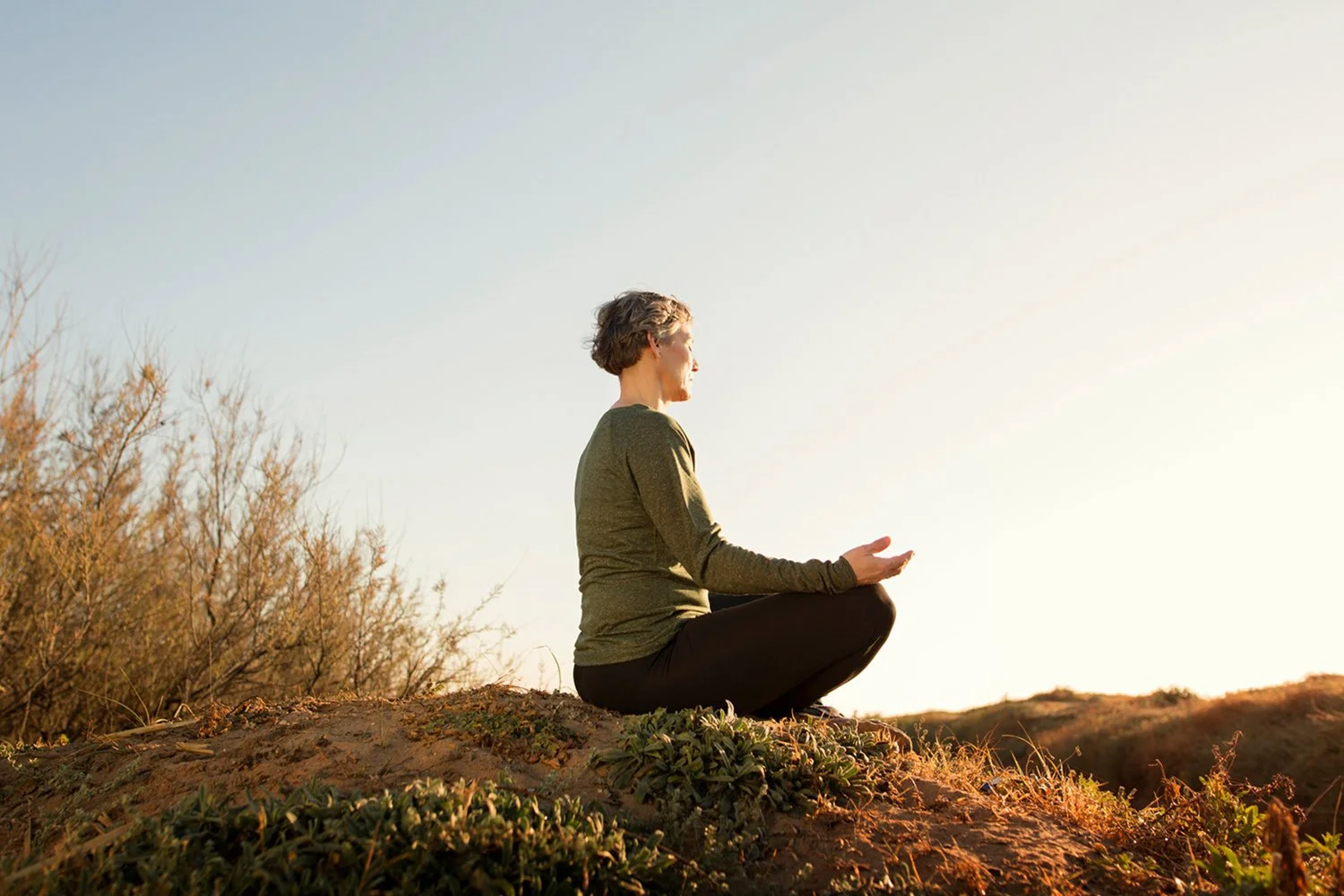
Stress has a sneaky way of showing up: a clenched jaw in traffic, a tight chest before a stressful meeting, racing thoughts when you’re just trying to sleep. When everything feels like too much, a calming meditation can help you slow down and reset.
You don’t need a quiet room, a perfect lotus pose, or any previous experience. These short, accessible meditation techniques are built for the in-between moments — when you’re in your car, on your lunch break, or hiding in the bathroom for five minutes of peace.
We’ll walk you through easy, approachable ways to use calming meditation to relieve stress, reset your nervous system, and reconnect with yourself. Let’s dive in.

What is a calming meditation?
A calming meditation is a simple mental reset. A way to check in with yourself when you’re overwhelmed or your body feels tense. It’s not about silencing your brain or achieving some higher state of being. You’re just pausing long enough to notice what’s going on inside and giving yourself a little space to breathe.
You might focus on your breath, follow a gentle voice guiding you through a body scan, or imagine a peaceful scene. Some calming meditations involve repeating a comforting phrase or paying attention to your senses to bring you back to the present moment.
The goal of any calming meditation is to create a brief moment of stillness in the middle of whatever chaos you’re moving through. One that helps your nervous system settle and your mind soften, even just a little.

Do calming meditations help reduce stress?
Yes. Calming meditation has been shown to lower cortisol (one of the body’s main stress hormone), reduce symptoms of anxiety, and help people respond to pressure with more clarity. It’s one of the few tools that directly supports both your mind and your nervous system, especially when you practice it regularly. Even if it’s just for five minutes a day.
When you’re stressed, your body goes into survival mode. Your heart rate spikes, your breathing gets shallow, and your thoughts get faster and sometimes more negative. Calming meditation helps reverse that pattern by activating your parasympathetic nervous system — the one responsible for rest, digestion, and recovery.
Over time, practicing calming meditation can increase your baseline resilience, making it easier to handle everyday stressors. But even in the moment, a few deep breaths or a quick guided session can create enough space between the trigger and your reaction to help you move forward with more ease.
Related read: How to use meditation to improve your mental health

How to do a calming meditation: 5 techniques for stress relief
You don’t need a quiet retreat or a 30-minute time block to benefit from calming meditation. These techniques are flexible, beginner-friendly, and built for real life. Each one helps ease tension and bring you back into your body, one breath at a time.
1. Box breathing (4-4-4-4 method)
This is one of the fastest ways to regulate your nervous system, especially when you feel overwhelmed or stuck in fight-or-flight mode. Here’s how it works:
Inhale slowly through your nose for four counts.
Hold your breath for four counts,
Exhale through your mouth for four counts.
Hold again for four counts.
Repeat this cycle 4–6 times. You can do it with your eyes open or closed, sitting in a chair, or even in a bathroom stall if that’s the only private space you can find. It’s discreet and highly effective for calming racing thoughts or physical tension.
💙 Explore Box Breathing during this short meditation with Jeff Warren in the Calm app.

2. Body scan meditation
Stress often shows up in the body before we even notice it mentally. A body scan helps you check in with yourself and gently release areas of tightness or discomfort.
Start by bringing your attention to your toes, then slowly move upward — feet, legs, hips, back, shoulders, jaw. With each area, ask yourself: Can I soften this just a little?
You don’t have to change anything — just noticing what’s tight and offering it a bit of kindness can make a big difference.
💙 From 3 to 30 minutes, the Calm app has guided Body Scans for different moments of you day.

3. Grounding with the 5–4–3–2–1 technique
When your thoughts are spiraling, grounding through your senses can help anchor you in the present. Try a simple mindfulness exercise where you name or notice:
5 things you can see
4 things you can touch
3 things you can hear
2 things you can smell
1 thing you can taste
This technique is especially helpful during anxiety spikes or when your brain won’t stop replaying a stressful conversation.
💙 Let Tamara Levitt walk you through the 5-4-3-2-1 exercise on the Calm app.

4. Loving-kindness meditation
This practice is all about softening your inner voice and offering yourself (and others) a little grace. It’s less about forcing positivity, and more aobut intentionally practicing warmth.
Silently repeat simple phrases like:
May I be calm
May I be safe
May I be at ease
After a few rounds, you can extend those same phrases to someone else. It may feel awkward at first, but studies show this kind of meditation increases emotional resilience and reduces reactivity over time.
💙 Dig more deeply into the topic in Jeff Warren’s Loving-Kindness meditation on the Calm app.
5. Visualization meditation
If sitting still and focusing on the breath isn’t working for you, visualization can be a helpful alternative.
Close your eyes (or keep them softly focused) and picture a calming scene — a quiet forest, a cozy room, a sunny field. Try to engage all five senses:
What does the air smell like?
What sounds are in the background?
What do your feet feel like against the ground?
Let your imagination do the work. The brain often responds to imagined experiences the same way it does to real ones, which means this kind of meditation can create a real sense of calm and safety.

Calming meditation FAQs
How do I meditate to relieve anxiety?
Start by giving yourself permission to keep it simple. Meditation for anxiety doesn’t require silence or stillness; it just needs a bit of focused attention. Begin with your breath: Place one hand on your chest and one on your belly, then take slow, steady breaths in through your nose and out through your mouth.
The goal isn’t to eliminate your anxiety but to slow the momentum of it so it feels more manageable.
What are short calming meditations I can do when stressed?
When time is tight, choose meditations that require little setup. Box breathing, grounding through your senses, and brief body scans are especially effective for quick resets. Even a two-minute breathing exercise at your desk or a five-minute guided meditation during a break can lower your heart rate and give your mind a rest.
The key is finding a practice you’re actually willing to do when things feel overwhelming, and not something that adds to your mental to-do list.
Is it possible to instantly calm my anxiety?
Some meditation techniques can reduce anxiety quickly, but “instantly” might be a stretch. After all, your nervous system usually needs a few minutes to shift out of a stress response.
Breathwork, like the 4-4-4-4 method, or grounding exercises using your senses, can help calm your body fast. These tools don’t erase anxiety, but they can create enough space between the stress and your reaction to help you feel more in control, even if the feeling doesn’t go away completely.
Can meditation exercises really stop stress?
Meditation doesn’t make your problems disappear, but it can change how your body and mind respond to them. Think of it like strength training for your nervous system: it builds resilience and helps you bounce back more easily after stressful events.
Over time, a regular meditation practice can reduce chronic stress, but even occasional sessions can provide immediate relief when things feel intense.
What’s the best time for a calming meditation?
The best time to meditate is the one that fits your life. For some, it’s a few minutes in the morning to set the tone for the day. For others, it’s a midday pause between meetings or a wind-down practice before bed.
If you’re in a high-stress period, even one minute of slow, focused breathing when transitioning between tasks can make a difference.
Do I need to sit still to meditate?
Not at all. Movement-based meditation is a great option, especially if you feel restless or anxious. You can practice mindfulness while walking, stretching, or even washing dishes as long as you’re paying attention to what you’re doing and how your body feels.
Sitting still can be helpful, but it’s not a requirement. Choose what works best for your energy, your mood, and your space.
Are guided calming meditations better for beginners?
Yes — guided meditations offer structure and gentle support, which can be incredibly helpful when you’re just starting or feeling overwhelmed. A calm, steady voice can anchor your attention and reduce the pressure to “do it right.”
Calm has a wide range of guided sessions that vary in length, style, and focus, so you can experiment and find what actually helps, without having to figure it all out alone.
What if meditation makes me more anxious?
This is more common than people realize, especially if you’ve experienced trauma or if you’re not used to sitting with uncomfortable thoughts or sensations.
If meditation brings up more anxiety, try keeping your eyes open, focusing on your breath rather than your body, or choosing movement-based practices like walking or yoga. You can also stick with shorter sessions or use external anchors like music, soundscapes, or guided recordings to keep you focused.
And if the anxiety feels intense or persistent, it’s okay to step back and explore other tools. A therapist can help you find practices that feel safe and supportive.
Calm your mind. Change your life.
Mental health is hard. Getting support doesn't have to be. The Calm app puts the tools to feel better in your back pocket, with personalized content to manage stress and anxiety, get better sleep, and feel more present in your life.

Images: Getty