
Clinically reviewed by Dr. Chris Mosunic, PhD, RD, MBA
Explore 6 ways seniors and older adults can use mindfulness and meditation to help reduce stress, improve brain health, and bring more peace and purpose to their daily lives.
As you get older, your needs shift — and that includes how you care for your mental health. Many seniors want to feel calmer, steadier, and more at ease, but aren’t always sure where to start. Enter mindfulness and meditation: simple, gentle practices that invite you to slow down and reconnect with yourself.
These practices are often misunderstood. You don’t need special equipment or a ton of time. Mindfulness is noticing what’s already happening, while meditation is giving your attention something steady to rest on. Both can fit into everyday moments in a quiet, natural way.
We’ll share clear, practical ways older adults can use these tools to reduce stress, support memory and focus, and feel more grounded.

What’s the difference between mindfulness and meditation?
Mindfulness and meditation often get blended together, but they’re not the same skill. Understanding the difference can make both feel easier and less intimidating.
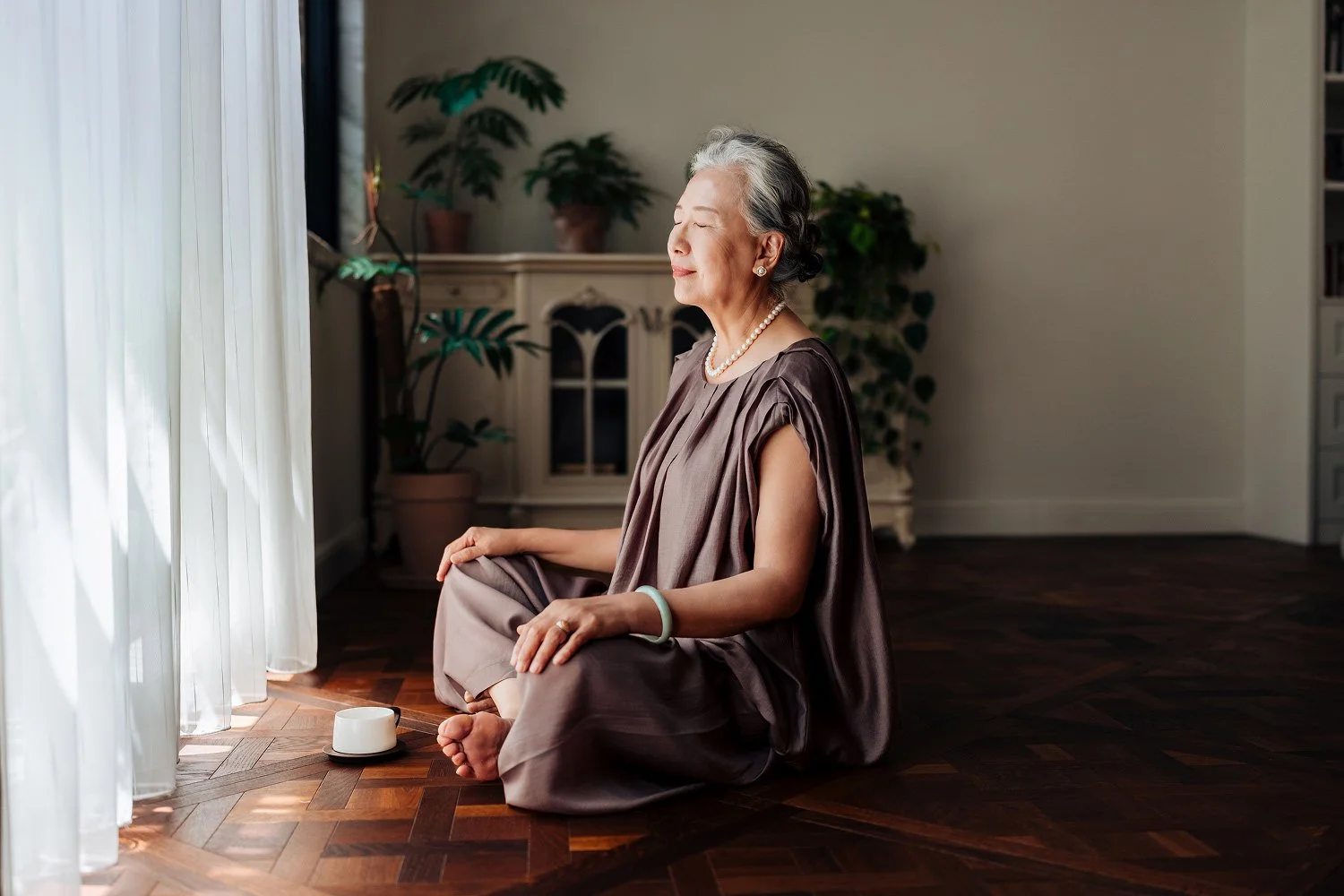
Mindfulness is everyday presence: the simple act of noticing what’s happening right now. There’s no goal to clear your mind — you’re just noticing simple things like the feel of your breath or the warmth of a cup in your hands.
Meditation is a structured practice you set aside time for to focus on one thing, such as the breath, a phrase, or a guided recording. Each time your mind wanders, and you come back, you’re strengthening attention and calming your nervous system.
Here’s a helpful way to remember it: Mindfulness can happen anytime, while meditation builds the skill of mindfulness. Together, they support emotional balance, cognitive health, and a calmer daily rhythm.
Read more: Mindfulness vs meditation: What are the key differences?

What are the mental and physical benefits of mindfulness and meditation for aging?
Mindfulness and meditation can give steady support as people get older. They help the mind and body work together in a calmer, easier way. Here are some benefits many seniors notice:
Less stress: Slow breathing can relax the body and help you feel more at ease during the day.
Less anxiety: Paying attention to your breath or a calming phrase can break up worry and help you feel safer during hard moments.
Better focus and memory: Regular practice can make it easier to pay attention, remember details, and stay on task.
Better sleep: Meditation before bed can quiet busy thoughts and help you fall asleep and stay asleep.
Chronic pain support: Mindfulness can help the body soften around pain instead of tightening, which can lower discomfort.
Improved heart health: Slow breathing and gentle relaxation can help keep blood pressure healthier and ease strain on the heart.
Improved mood: Many older adults say they feel lighter, steadier, and less weighed down when they practice regularly.
More resilience: Mindfulness can make it easier to handle tough moments without feeling as overwhelmed.
Better body awareness: It helps you notice tightness sooner and move more comfortably throughout the day.
More connection: Many seniors feel more gratitude, presence, and closeness with others. Mindfulness can bring more meaning to everyday moments.
Related read: How to use meditation to improve your mental health

What types of mindfulness and meditation techniques are best for seniors?
The best techniques for older adults are simple, gentle, and easy to adjust. Here are some suggestions that don’t require long focus or a lot of physical effort — perfect for seniors.
Breath-focused practices
Paying attention to your breathing is one of the easiest ways to practice mindfulness. You can do it sitting, lying down, or standing with support. The goal is to notice each breath without trying to change it. Even a few slow breaths can help the mind settle and ease stress.
Body awareness techniques
Body scans and light tension-release exercises can help you notice how different parts of your body feel. These practices can make it easier to manage pain, loosen stiffness, and build a kinder relationship with the body as it changes with age.
Compassion-based meditation
Loving-kindness meditation uses short, caring phrases that you repeat quietly to yourself or others. It can be very comforting in moments of grief, loneliness, or heavy emotions.
Sensory grounding
Focusing on sounds, textures, smells, or small details around you can bring your attention back to the present moment. This is helpful during anxious times or when your thoughts start to spiral. It gives the mind a simple place to land.
Guided meditation
Some older adults find it easier to follow a calm voice than to meditate alone. Guided meditations take away the pressure of knowing what to do next, which can help with focus and confidence — especially for beginners or those with cognitive changes.
Light mindful movement
Mindfulness can happen while moving. Gentle stretching, chair exercises, or slow, supported movement help connect your attention to your body without strain. This can be especially helpful for seniors who feel calmer when they are not sitting still.

How to use meditation and mindfulness to improve your lifestyle: 6 activities for seniors
These activities show how mindfulness and meditation can bring ease to real moments in a senior’s day — not as formal exercises, but as grounded, lived-in practices. Each one builds calm through routines and small shifts.
1. Create a mindful morning rhythm
A gentle morning rhythm offers steadiness during a part of the day that often feels rushed or uncomfortable. Instead of jumping into activity, take a moment to sit at the edge of the bed, feel your feet on the floor, and notice how your body feels.
Pair this with one small ritual—opening the curtains, making a warm drink, or stretching your hands—while bringing your attention to simple sensations. This slow transition from rest to wakefulness helps ease stiffness, reduce morning anxiety, and create a calmer foundation for the hours ahead.
2. Turn everyday chores into grounding rituals
Daily tasks can become opportunities to reset your mind. When you’re wiping a counter, folding towels, tending plants, or sorting mail, focus on one steady detail — the texture of the fabric, the sound of water, the pace of your hands. Instead of rushing through the task, allow it to become a quiet moment of presence.
This helps break up scattered thinking and offers small waves of calm throughout the day, especially for seniors who find comfort in routine.
💙 Need a little extra guidance? Listen to Jeff Warren’s Sensory Grounding SOS on the Calm app.
3. Develop a calm transition between parts of the day
Transitions can feel jarring, especially when your energy levels shift or your schedules change. Adding a short, intentional pause between activities helps maintain emotional steadiness.
Before moving from morning to afternoon, or before heading to an appointment, take a minute to breathe slowly or step outside for fresh air. Paying attention to this transition helps the nervous system reset and makes the next part of the day feel more manageable and less rushed.
4. Use mealtimes as moments of presence and gratitude
Meals are natural anchors in the day, and slowing down for a moment can make them more nourishing. Before taking the first bite, pause and notice the colors, smells, and warmth of the food. Eating a little more slowly at the beginning supports digestion and helps calm the mind.
Many older adults also enjoy taking a brief moment of gratitude — not as a formal ritual, but as a quiet acknowledgment of the care, history, or connection behind the meal. It adds emotional depth and grounding to an everyday routine.
💙 The Mindful Eating series on the Calm app can transform your relationship with mealtime.
5. Build an afternoon reset to support energy and mood
Mid-afternoon can bring a dip in energy, especially for seniors who experience fatigue, loneliness, or cognitive fog later in the day. A short reset can shift the mood and restore clarity.
Sitting in a sunny spot, listening to calming music, reading a few lines of a favorite book, or simply noticing the sounds in the room can give the mind a needed break. Over time, this gentle pause helps regulate mood, reduce overwhelm, and carry more ease into the rest of the day.
6. Create a soothing evening wind-down routine
Building a calming wind-down routine can improve sleep and help the mind transition into rest.
Dim the lights, sit in a comfortable spot, or do a quiet activity like reading or listening to calming music. Take a few breaths and mentally release one thought from the day. This soft closing ritual teaches the mind to unwind at a manageable pace.

Meditation and mindfulness for seniors FAQs
Why is mindfulness meditation good for seniors?
Mindfulness meditation can support both emotional and physical health as people age. It helps calm the nervous system, lowering stress and easing anxious thoughts. Many older adults also find it helps them feel steadier during health changes or long, quiet parts of the day.
Over time, mindfulness can improve attention, support memory, and give a greater sense of control during hard moments. It’s a gentle practice that meets seniors where they are and offers small moments of calm.
What are ideal mindfulness techniques for seniors?
The best techniques are simple and easy to adjust. Breath awareness, sensory grounding, body scans, and mindful coloring all work well because they don’t require long focus or a lot of effort. Many older adults also enjoy loving-kindness meditation, which uses short, caring phrases to support connection and ease loneliness.
The right technique is the one that feels comfortable and easy to return to, even on days when energy or focus is low.
How can mindfulness relieve anxiety in older adults?
Mindfulness helps break the cycle of anxiety by bringing attention back to something real, like your breath, a sound, or a feeling in your body. When the mind returns to the present moment, the body starts to relax.
With practice, mindfulness makes it easier to notice anxious thoughts earlier and respond with more calm.
How can seniors build mindfulness into daily life?
Mindfulness works best when added to everyday routines. Drinking your morning coffee or tea slowly, stepping outside for a mindful walk, or taking a few deep breaths before meals can become simple moments of presence.
Choose one small practice to repeat each day, like a two-minute breathing break or a short moment of gratitude. Consistency matters more than length. When mindfulness becomes part of daily life, its benefits grow.
Can meditation and mindfulness help with sleep issues?
Yes. Mindfulness and meditation can quiet the mental chatter that often keeps people awake. By calming the nervous system and easing worry, they help the body settle into rest.
Short practices like slow breathing, evening body scans, or gentle guided recordings can relax the body and mind. Seniors who practice regularly often fall asleep faster, sleep longer, and feel less distracted by nighttime thoughts.
How long should a senior meditate each day?
A few minutes can make a big difference. Many older adults benefit from 5–10 minutes a day, especially when they practice regularly. Seniors can meditate longer if it feels right, but shorter sessions are often easier to keep up with and still very effective.
The goal is to choose a length that feels doable. A steady, short practice supports well-being better than long sessions that are hard to maintain.
Can mindfulness support brain health or memory?
Yes. Mindfulness can help improve attention, memory, and mental flexibility — skills that naturally shift with age. It doesn’t work by pushing the brain harder, but by quieting distractions and helping you think more clearly.
Over time, you might notice it’s easier to stay focused, follow conversations, and remember details. Mindfulness may also reduce mental strain by helping the mind work in a steadier way.
What are the best breathing exercises for seniors?
The best breathing exercises are gentle, simple, and easy to remember. Slow belly breathing, 4–6 breathing (inhale for four, exhale for six), and humming exhales can all calm the body and slow the heart rate. Box breathing can also help, though the breath holds can be shortened or skipped if needed.
These exercises can be done sitting, lying down, or standing, which makes them flexible for different mobility levels.
Calm your mind. Change your life.
Mental health is hard. Getting support doesn't have to be. The Calm app puts the tools to feel better in your back pocket, with personalized content to manage stress and anxiety, get better sleep, and feel more present in your life.

Images: Getty