
How to celebrate Lunar New Year at home or at work

Clinically reviewed by Dr. Chris Mosunic, PhD, RD, MBA
Wondering how to celebrate Lunar New Year with intention? Explore the history and traditions behind the Spring Festival and 7 ways to join the celebrations.
Lunar New Year marks a turning point on the calendar, often centered on reunion meals, shared preparation, and traditions passed through families over generations. Celebrated across Asia and in communities around the world, the holiday follows the lunar calendar and is sometimes referred to as the Spring Festival, reflecting its ties to renewal and seasonal change.
There’s no single way to observe Lunar New Year. Customs vary widely depending on culture, region, and family history, and they continue to evolve. Some people grow up immersed in these traditions, while others encounter them through neighborhood events, workplace celebrations, or time spent with friends who celebrate.
However it’s observed, Lunar New Year carries deep cultural meaning. Let’s explore where these traditions come from and how they’re practiced. Plus, how to respectfully participate whether you’re celebrating at home, marking the occasion at work, or joining a broader community gathering.

What is Lunar New Year?
Lunar New Year is a cultural holiday, celebrated in East and Southeast Asia that marks the beginning of a new year based on the lunar calendar. While it is referred to as Chinese New Year in some settings, the holiday includes distinct celebrations such as Korean Seollal, Vietnamese Tết, and Tibetan Losar.
The date of Lunar New Year changes each year, but it typically occurs between late January and mid-February. The celebration can last several days (depending on the tradition) to mark the start of a new year and the close of the one before it. It creates a clear break from everyday life and offers time for rest, gathering, and reflection.
Family plays a central role in the holiday. Many celebrations focus on honoring elders, remembering ancestors, and spending time together across generations. These moments help keep traditions alive and strengthen connections within families and communities. Many customs are meant to welcome luck, health, and positive beginnings for the year to come.
The history behind Lunar New Year
Lunar New Year began more than 3,000 years ago in farming communities that followed the lunar calendar. Early celebrations marked the end of winter and the return of longer days. This time was used to honor ancestors, give thanks for surviving the cold months, and prepare for the growing season ahead.
As the holiday developed, local customs and stories shaped how it was observed. One well-known legend tells of Nian, a creature believed to fear loud noises and the color red. This story helped shape traditions such as firecrackers and red decorations. As people migrated and cultures blended, these customs changed and spread, leading to the many forms of celebration seen today.
Even with these differences, Lunar New Year has remained a time tied to family, tradition, and starting a new year together.

Lunar New Year traditions across the world
Lunar New Year is celebrated across many countries and cultures, each with its own traditions shaped by history and community values. While the holiday often shares themes of renewal, family, and good fortune, the ways people celebrate can vary widely from one region to another.
China
In China, Lunar New Year is often called the Spring Festival and centers on family reunions. Many people travel long distances to return home for the New Year’s Eve meal, which is one of the year's most important gatherings.
Homes are typically cleaned beforehand and decorated with red symbols believed to bring good luck. Families share foods that represent togetherness and prosperity, such as dumplings or whole fish.
Public celebrations may include fireworks, lion dances, and temple fairs, especially in cities and Chinatowns around the world, though some traditions vary by region and local rules.
Vietnam (Tết)
In Vietnam, Lunar New Year is known as Tết and is the most important holiday of the year. It places a strong focus on family, honoring ancestors, and welcoming good fortune into the home. In the days leading up to Tết, many families clean their homes and decorate with flowers such as peach blossoms or kumquat trees.
Traditional foods like bánh chưng are prepared and shared, and people often spend time visiting relatives or gathering for meals over several days. While specific customs can vary by region and household, Tết is widely seen as a time to offer well-wishes, show respect to elders, and begin the year with care and harmony.
Korea (Seollal)
Seollal is a major holiday in Korea focused on family and tradition. Many families gather to honor elders and family history through ancestor rituals known as charye. People often wear traditional clothing and begin the day with formal greetings that show respect across generations.
Food plays an important role during Seollal, especially tteokguk, a rice cake soup that symbolizes growing one year older. Families typically share meals and spend time together through games and conversations, marking the start of the new year with gratitude and connection.
Tibet and Himalayan regions (Losar)
Losar, the Tibetan New Year, is celebrated in Tibet and Himalayan regions such as Nepal and Bhutan. The holiday blends spiritual practice with seasonal celebration, and traditions can vary by region and community. In many places, preparations include cleaning the home, making offerings, and taking part in prayers or religious ceremonies.
Losar is often marked by shared meals with family and rituals meant to clear away the past year. The length and specific practices of the holiday vary by region, with a shared focus on renewal and spiritual reflection.
Lunar New Year in multicultural and diaspora communities
In many countries, Lunar New Year is celebrated through public festivals, parades, and cultural events organized by local communities. Schools, museums, and workplaces may also recognize the holiday through learning activities or shared meals. These celebrations often include performances, food, and decorations that reflect cultural heritage.
Traditions are often adapted to fit local life while still honoring cultural roots. For many people, these gatherings help maintain a connection to their heritage, while also inviting others to learn and participate.

How to celebrate Lunar New Year: 7 ways to honor the Spring Festival
These ideas are meant for anyone taking part in Lunar New Year, whether the holiday is part of your own background or something you’re honoring alongside others.
1. Start with learning
If Lunar New Year isn’t part of your own upbringing, learning is an important first step. This might include reading about the holiday, understanding which cultures celebrate it, or listening to how people describe their own traditions. In shared spaces like workplaces or classrooms, learning first helps avoid assumptions and keeps the focus on respect.
If the holiday is part of your own tradition, learning may look like reconnecting with customs, stories, or meanings that feel important to you now.
Related read: How to learn something new every day: 7 tips for a curious mind
2. Prepare your space with intention
Many Lunar New Year traditions include cleaning and organizing before the new year begins. This practice represents letting go of the old and making room for new beginnings. Preparation doesn’t have to be large or time-consuming. Simple actions like tidying a desk, refreshing a shared space, or letting in fresh air can reflect the spirit of the tradition.
In some cultures, cleaning is avoided on New Year’s Day itself, as it’s believed to sweep away good fortune.
💙 Learn more about the celebration with the Festival of the First Moon Sleep Story on the Calm app
3. Share food that carries meaning
Food plays an important role in Lunar New Year celebrations, especially dishes linked to abundance, long life, or togetherness. Common examples include dumplings, noodles, rice cakes, and whole fish, though foods vary by culture and region.
Taking part can look different depending on access and experience. Cooking a family dish, ordering from a local restaurant, or learning what certain foods symbolize can all be meaningful. In group settings, naming the meaning or tradition behind a dish helps center culture rather than novelty.
4. Use decorations thoughtfully
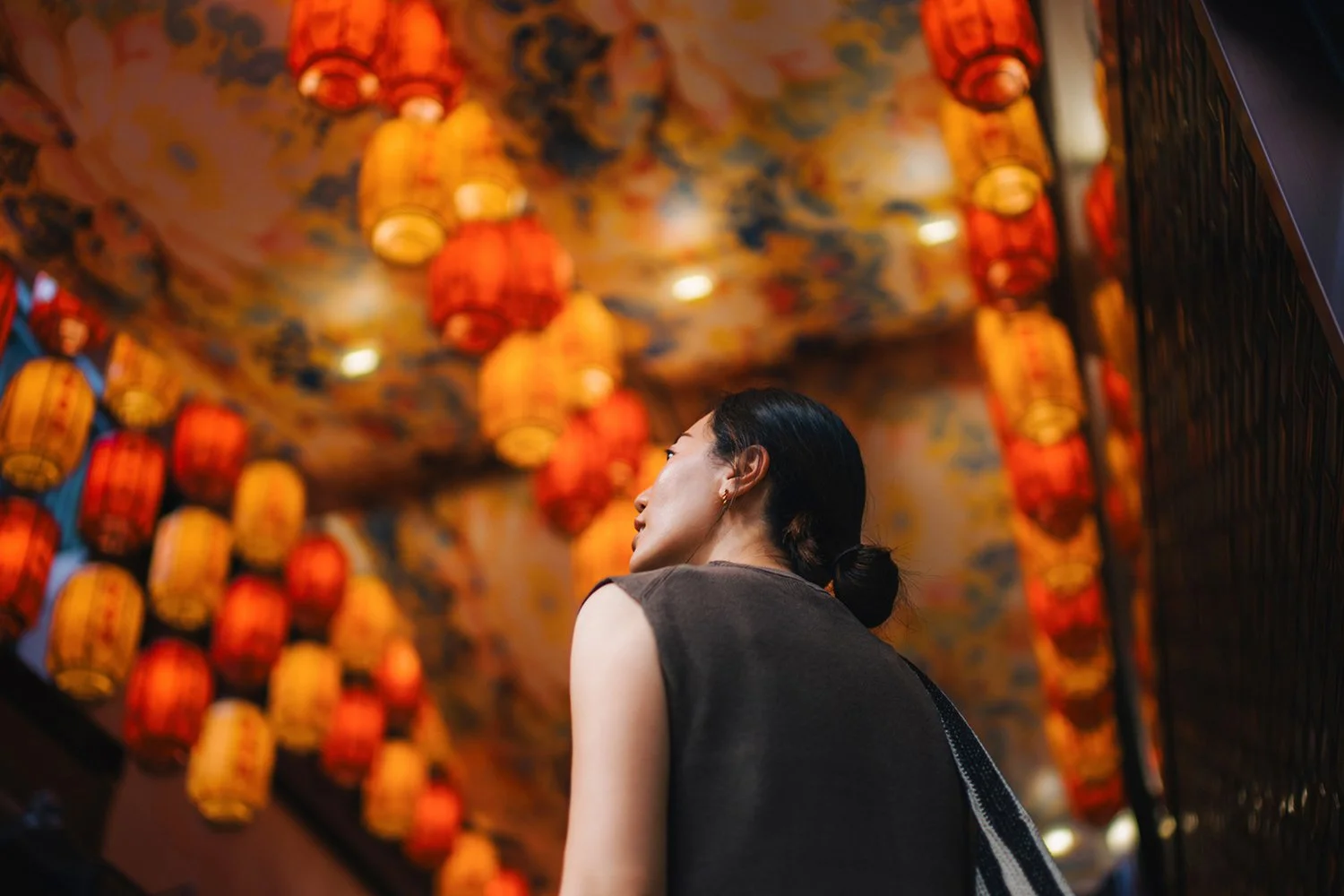
Red is commonly used during Lunar New Year because it symbolizes luck and protection. Decorations may include red paper, banners with positive phrases, lanterns, or flowers.
In shared or public spaces, simple and thoughtful choices work best. Avoid mixing symbols from different cultures or using images without knowing their meaning.

5. Acknowledge the holiday in shared spaces
In workplaces, schools, or community settings, recognizing Lunar New Year can help people feel seen and included. This might look like acknowledging the holiday, offering a shared meal, or allowing flexibility for time off.
Allow space for those who celebrate to share personal stories, or cultural significance, but so your best not to require them to do so. It should be their choice to share or not.
6. Honor family and lineage (if that feels safe)
If Lunar New Year is part of your own family tradition, this may be a time to honor elders or ancestors through rituals, shared meals, storytelling, or quiet reflection.
If you are celebrating alongside others, honoring lineage may look different. That could mean making space for family time, showing respect for traditions that are important to others, or supporting loved ones in how they choose to observe the holiday.
Related read: Here’s why belonging is so important for your mental health
7. Participate in community celebrations
Community celebrations can take many forms, including public festivals, parades, museum events, or local gatherings. For people who celebrate Lunar New Year as part of their culture, these events may be a way to connect with the community and keep traditions visible. For others, they can offer a chance to learn and take part in a shared experience.
Whether you are helping organize an event or attending one, follow local guidelines, respect cultural boundaries, and support the communities at the center of the celebration.

How to celebrate Lunar New Year FAQs
How long does Lunar New Year last?
In many traditions, especially Chinese Lunar New Year, the celebration lasts 15 days. It begins with the new moon of the lunar calendar and ends with the Lantern Festival.
In other cultures, the length and structure of the holiday can differ, with some celebrations focusing on the first few days rather than a full two-week period.
Across regions, the opening days are often the most widely observed, while later days may carry specific meanings or customs depending on the culture and community.
How do you celebrate Lunar New Year?
Lunar New Year is typically celebrated through family gatherings, shared meals, and traditions that focus on renewal and good fortune. Across different cultures, common practices may include preparing the home before the new year, honoring elders or ancestors, exchanging well-wishes, and eating foods with symbolic meaning.
Customs vary widely by culture, region, and family. Many people also adapt traditions to fit their current location, schedule, or family structure.
What are traditional Chinese New Year celebration ideas?
Traditional Chinese New Year celebrations often include family reunion dinners, giving red envelopes with money, decorating with red and gold, and eating symbolic foods such as dumplings, noodles, and fish.
Firecrackers and lion or dragon dances may also be part of public celebrations, reflecting long-standing beliefs about protection, luck, and prosperity for the year ahead.
What is considered unlucky during Lunar New Year?
In many traditions, certain actions are avoided during the early days of Lunar New Year because they are believed to bring bad luck. These may include cleaning or sweeping on New Year’s Day, breaking objects, using sharp language, or speaking about illness or loss.
While beliefs vary, the shared intention is to protect the sense of renewal and positivity at the start of the year.
How do families celebrate Lunar New Year together?
Families often celebrate Lunar New Year by prioritizing time together, especially across generations. This may include traveling for reunion meals, honoring elders, sharing traditional foods, and passing down stories or customs.
Even when families are separated by distance, many maintain connection through phone calls, video gatherings, or shared rituals adapted to modern life.
How can I celebrate Lunar New Year respectfully at work?
Respectful workplace celebration focuses on inclusion and an openness to learn. This can involve acknowledging the holiday in company communications, offering learning resources, hosting an optional shared meal, or providing flexibility for time off.
Allow space for those to celebrate to share if they want to, but don’t require it of them for you to be informed. If you can do independent research yourself, take the opportunity to learn something new.
Can you celebrate Lunar New Year if you’re not Asian?
People who aren’t Asian can celebrate Lunar New Year when participation is grounded in respect and learning. This means recognizing the cultural origins of the holiday, avoiding stereotypes or costume-based interpretations, and supporting communities connected to the tradition.
What are modern Lunar New Year customs and activities?
Modern Lunar New Year customs often blend tradition with contemporary life. Many people exchange digital red envelopes, gather virtually with family, or celebrate through community events, social media greetings, and cultural programs. These adaptations reflect how the holiday continues to evolve while preserving its core values of connection, renewal, and intention.
Calm your mind. Change your life.
Mental health is hard. Getting support doesn't have to be. The Calm app puts the tools to feel better in your back pocket, with personalized content to manage stress and anxiety, get better sleep, and feel more present in your life.

Images: Getty