
Clinically reviewed by Dr. Chris Mosunic, PhD, RD, MBA
International Yoga Day is the perfect time to start (or deepen) your practice. Explore the benefits of yoga for mental and physical health, and a step-by-step routine to celebrate.
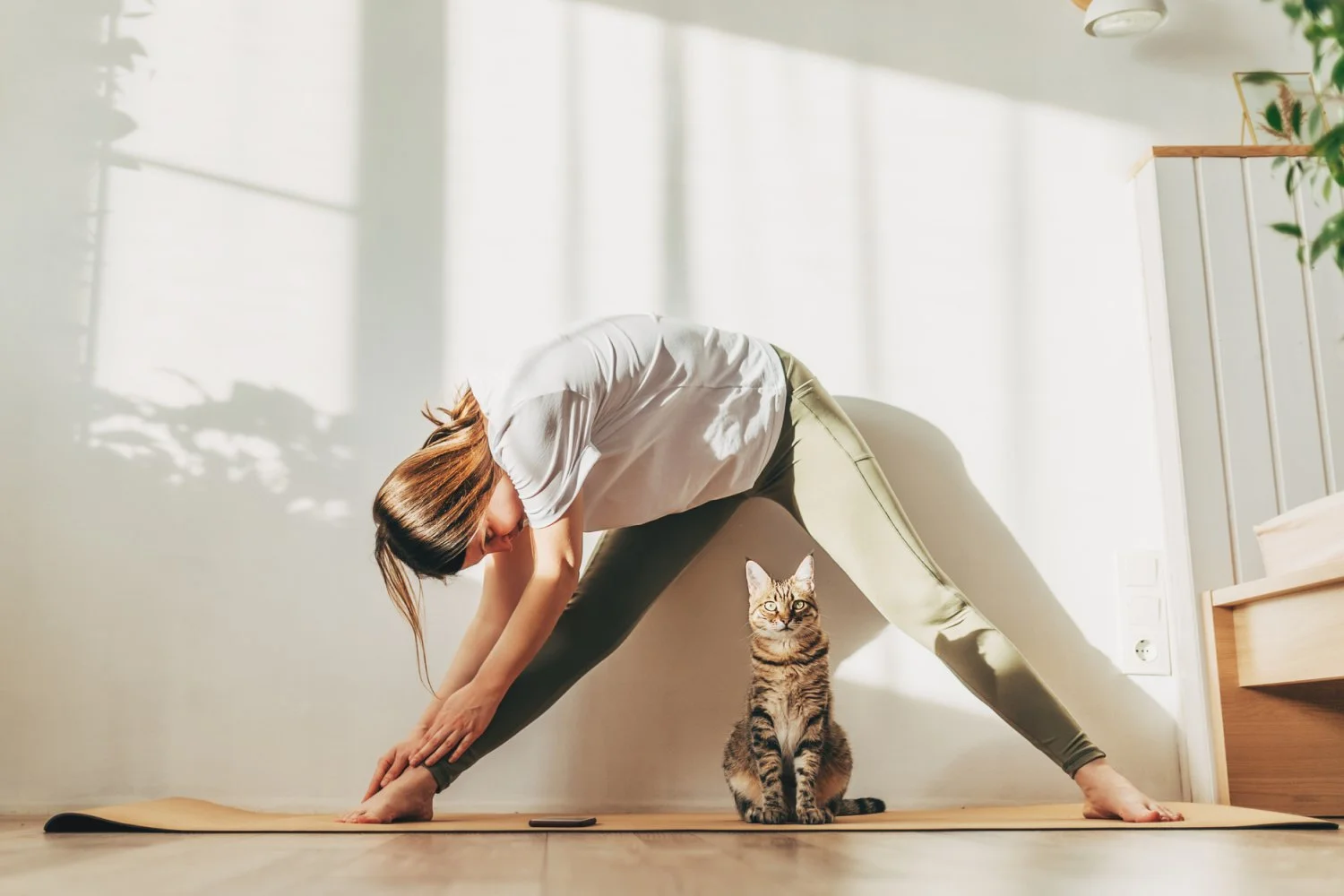
If you’ve never tried yoga or want to get back into a practice, International Yoga Day, on June 21st, is a great time to give it a shot. You might think you need a fancy yoga mat or membership to a studio, but that couldn’t be further from the truth. Yoga can be done anytime, anywhere.
At its core, yoga is about connecting movement with breath, and bringing your attention to what's happening in your body right now. That's it. It’s good for physical health, reduced stress and anxiety, and boosted mental health.
Here's a look at what International Yoga Day is, why yoga is worth your time, and a simple beginner-friendly routine you can try at home to celebrate.

What is International Yoga Day?
International Yoga Day is a United Nations event held every year on June 21. It was set up in December 2014 after India's Prime Minister Narendra Modi proposed it at the UN. A record 175 countries backed the idea, and the first official celebration took place on June 21, 2015, with events in cities around the world.
The date has meaning. June 21 is the summer solstice, the longest day of the year in the Northern Hemisphere. It holds special significance in many cultures, which is part of why it was chosen.
The aim of the day is to show how yoga can support health and wellbeing. Yoga started in ancient India and has been around for thousands of years. Today, an estimated two billion people practice it worldwide. The UN sees it as more than just an exercise — it's a practice that supports the body, the mind, and overall quality of life.
5 benefits of yoga for the mind and body
You may have heard that yoga is good for you, and research backs up what yoga practitioners have long experienced. Here are five ways a regular practice can positively impact your mind and body:
1. It reduces stress and supports mental health: Yoga links movement with slow breathing and mindful awareness, and that pairing has a real effect on stress. Studies show it can ease symptoms of anxiety and depression, often working as well as other relaxation methods. The slow breathing in yoga signals to your body that it's safe to calm down, which is useful when stress has been running high.
2. It builds strength and flexibility: Yoga works several muscle groups at the same time, building both strength and range of motion. Research has found improvements in muscle strength, balance, and lower-body flexibility across age groups. Even one session a week can make a difference.
3. It supports heart health: Yoga has been linked to lower blood pressure, a slower resting heart rate, and better cholesterol levels. Yoga works best alongside other forms of movement rather than on its own, but it's a solid addition to a heart-healthy lifestyle.
4. It improves sleep quality: If winding down at night is a struggle, yoga can help. Slow or restorative styles have been shown to help people fall asleep faster and sleep more deeply. The mix of movement, breath focus, and mindfulness helps settle the mind before bed.
5. It sharpens focus and supports brain health: Staying present through a yoga pose, whether that's tracking your breath or holding your balance, is a form of attention training. Research suggests that yoga may support new connections in the brain and strengthen areas associated with memory and learning. Over time, this kind of practice can make it easier to focus and stay calm under pressure.
Read more: 6 benefits of yoga for mental health (and how to practice)

How to celebrate International Yoga Day: A simple 7-step routine
This routine is designed for beginners or anyone returning to yoga after a break. It takes about 20 minutes, needs no equipment beyond a mat or a soft surface, and covers key areas where most people carry tension: the hips, back, shoulders, and chest. Move at a pace that works for you.
1. Child's pose (Balasana) for 1-2 minutes
Start here. Kneel on the floor, sit your hips back toward your heels, and stretch your arms forward on the mat with your forehead resting on the mat. This is a grounding pose that gently stretches the lower back and hips while giving you a moment to arrive in your body. Breathe slowly and notice any tension you're carrying into the practice.
Related read: Restorative yoga: what it is, benefits and 5 relaxing poses
💙 Explore this mindful movement routine for Softening Anxiety with Mel Mah on Calm.
2. Cat-cow (Marjaryasana-Bitilasana) for 8-10 rounds
Come onto all fours with your wrists under your shoulders and knees under your hips. On an inhale, drop your belly, lift your chest, and gaze slightly upward (cow). On an exhale, round your spine toward the ceiling and tuck your chin to your chest (cat). Move through this slowly and rhythmically, letting the breath lead.
Cat-cow warms up the spine gently and is one of the most effective ways to ease lower back stiffness.
3. Downward-facing dog (Adho Mukha Svanasana) for 5 breaths
From all fours, tuck your toes and lift your hips up and back into an inverted V shape. Keep a slight bend in your knees if your hamstrings feel tight. Press through your palms and let your head hang relaxed between your arms. Hold for five slow breaths.
This pose stretches the hamstrings, calves, and shoulders while building upper body strength.
4. Low lunge (Anjaneyasana) for 5 breaths on each side
From downward dog, step one foot forward between your hands and lower your back knee to the mat. Sink your hips forward and down, and either keep your hands on the mat or raise your arms overhead. Hold for five breaths, then switch sides.
The low lunge opens the hip flexors, which tend to tighten in people who spend a lot of time sitting.
5. Warrior II (Virabhadrasana II) for 5 breaths on each side
Stand and step your feet wide apart. Turn your right foot out 90 degrees and bend your right knee so it's over your ankle. Extend your arms out to the sides at shoulder height, parallel to the floor, and gaze over your front hand. Hold for five breaths before switching sides.
Warrior II builds leg and core strength, opens the chest, and is one of yoga's most recognizable poses for good reason.
💙 Want to add music to your yoga practice? Check out this Flow State playlist from two-time Grammy-nominated trio Above & Beyond.
6. Seated forward fold (Paschimottanasana) for 1-2 minutes
Sit on the mat with your legs extended in front of you. On an inhale, sit tall. On an exhale, hinge at the hips and reach toward your feet, keeping your spine as long as possible. Don't worry about how far you reach.
This is a calming pose that stretches the hamstrings and lower back and, because of its forward-folding nature, naturally encourages the nervous system to settle.
Related read: 11 benefits of yoga for women to support health and well-being
7. Corpse pose (Savasana) for 3-5 minutes
Lie flat on your back with your arms resting by your sides, palms facing up. Close your eyes and let your feet fall open naturally. This is the most important pose in any yoga session, and the one people most often skip. Savasana gives your body time to integrate the practice. Let your breath return to its natural rhythm and allow yourself to simply rest.
If meditation is already part of your routine, this is a natural moment to bring in a short mindfulness practice, noticing sensations in the body without judgment as you let the session close.
💙 Check out Your Daily Relaxation movement routine from the Daily Move on the Calm app.
Read more: 10 different types of yoga practices (and their benefits for mind and body)

International yoga day FAQs
What is International Yoga Day, and why does yoga matter?
International Yoga Day is a UN event held on June 21st each year that highlights the benefits of yoga for health and wellbeing. Yoga matters because it works on the body and the mind at the same time.
Studies show it can ease anxiety and depression, build strength and flexibility, support heart health, and improve sleep. It's also adaptable, so most people can find a version of it that works for their body and schedule.
Why is International Yoga Day celebrated on June 21st?
June 21st is the summer solstice, the longest day of the year in the Northern Hemisphere. When Indian Prime Minister Narendra Modi proposed the observance at the UN in 2014, he chose this date for its significance across many cultures. The UN made it official on December 11, 2014, and the first celebration followed on June 21, 2015.
How can beginners celebrate International Yoga Day at home?
The simplest way to celebrate International Yoga Day is to try a short yoga session at home. The 7-step routine in this article takes about 20 minutes and requires no equipment or prior experience.
Beyond that, you could explore a beginner yoga class online, try a short breathwork or meditation session, or simply spend a few minutes in a gentle stretch. The goal of the day isn't to become a yoga expert but to experience the practice firsthand.
What are the benefits of yoga for mental and physical health?
Physically, yoga builds strength, improves flexibility and balance, supports heart health, and can help with chronic pain. Mentally, studies show it reduces anxiety, eases depression, lowers stress, improves sleep, and may support focus and memory.
The mix of movement, breathing, and mindfulness makes it one of the more well-rounded tools for everyday well-being.
Do I need to be flexible to start yoga?
No. Flexibility is something you build through yoga, not something you need before you start. Beginner poses are accessible to most bodies, and any pose can be adjusted to suit you. The practice meets you where you are.
Can yoga help with stress and anxiety?
Yes. Slow, controlled breathing, which is central to yoga, helps calm the body's stress response. Several peer-reviewed studies have found that yoga reduces stress and eases anxiety and depression. When paired with other mindfulness tools like meditation, those effects tend to be stronger.
If stress is a regular part of your life, yoga is worth adding to the mix.
Calm your mind. Change your life.
Mental health is hard. Getting support doesn't have to be. The Calm app puts the tools to feel better in your back pocket, with personalized content to manage stress and anxiety, get better sleep, and feel more present in your life.

Images: Getty